

Laica’s Journey: A Story of Survival and Resilience
Laica is a young dog living in the margins around Atirro, Costa Rica, near a local coffee factory. She’s a constant presence in the area, but with no official owner, she relies on the occasional kindness of workers for food scraps and sleeps completely exposed to the elements.
One day our co-founders Elena and Guillermo noticed that Laica could barely stand and it seemed she was losing weight rapidly. She was severely dehydrated, breathing fast and with obvious effort, and showed clear signs consistent with pneumonia. With no access to diagnostic tests, they were able to get her treatment based on the most likely causes of her condition. For days, it was uncertain whether she would survive. Slowly, against the odds, Laica recovered.
Not long after, she gave birth.
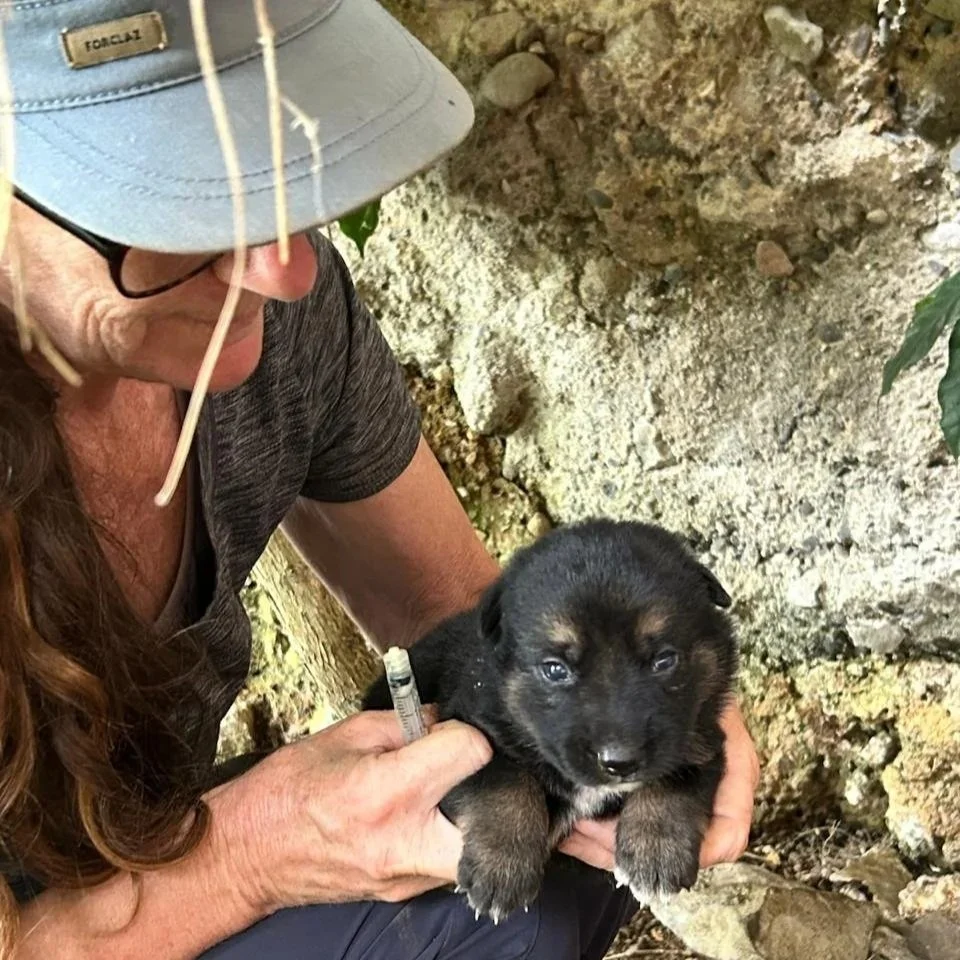
Dr. Elena Garde examines one of the six puppies
Laica delivered her puppies under coffee plants during the rainy season, without a roof or shelter to protect them. Despite the constant rain and flooding, she instinctively chose the driest place she could find. One night, when water began to rise, she carried each puppy one by one in her mouth to higher ground, moving them to safety. All six puppies were, remarkably, healthy.
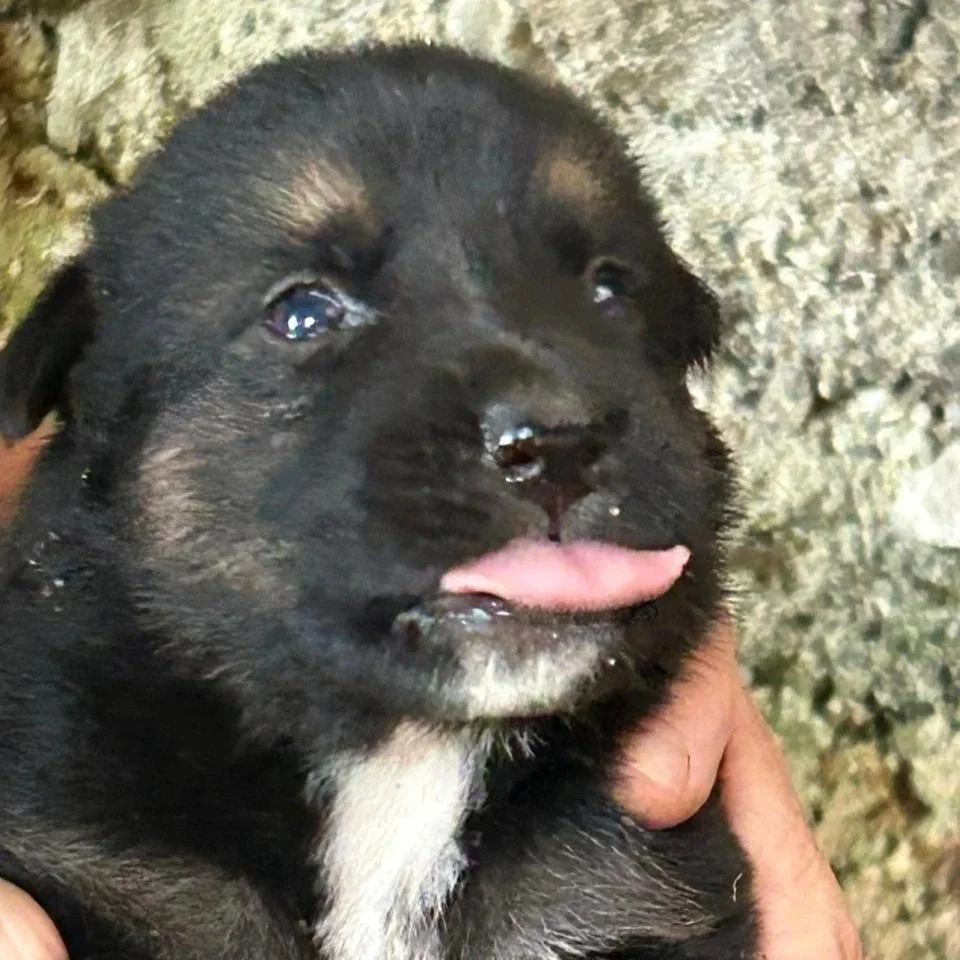
We were able to deworm both Laica and her puppies on an appropriate schedule and monitor them as best we could. Word spread quickly in the community, and one by one, people came forward to take the puppies home. Eventually, all six found homes.
Today, Laica is still there. She is no longer critically ill, but she remains thin and vulnerable, still living outdoors, still depending on inconsistent care. Her puppies are gone, and she is once again alone.
Without intervention, she would likely not have survived her illness, and her puppies would not have made it through the rainy season. Laica’s story is a reminder of how vulnerable free-roaming dogs are, especially unspayed females. Pregnancy and illness take an enormous physical toll, particularly when there is no consistent food, shelter, or veterinary care. Laica survived this time through instinct, resilience, and a bit of timely help—but without proper long-term care and sterilization, she remains at risk of facing the same hardships again. Her story reflects the ongoing reality for many dogs living unseen in rural communities, navigating survival one season at a time. Simultaneously, Laica’s case shows how just a little bit of timely care can go a long way to help even more animals than initially expected.